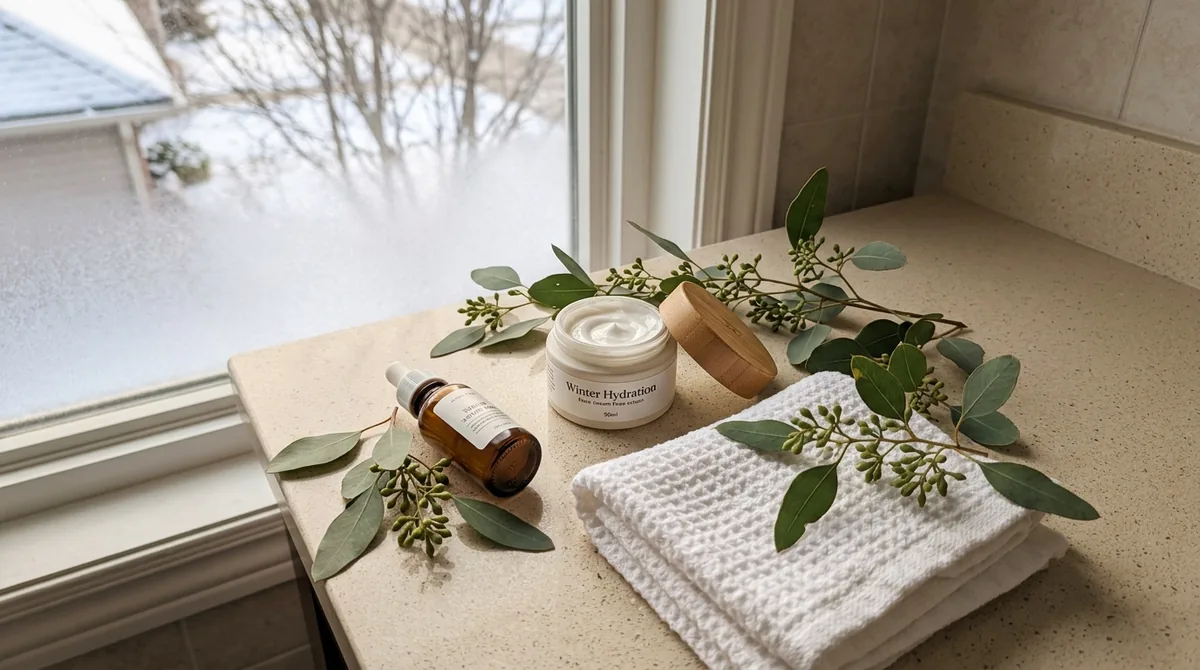
If winter always leaves your skin feeling tight, flaky, and uncomfortable, a good winter dry skin routine can change everything. These 10 simple steps will help you keep your skin soft, calm, and hydrated through the coldest months, without turning your routine into a chore.
Ever notice how your skin feels fine in October and then completely gives up by January? Same. The heater kicks on, the air turns dry, and suddenly your face feels tight by noon and your hands look rough no matter how much lotion you use.
I used to think winter skin was just something to suffer through. It is not. A few small changes to your routine can make a huge difference. Here is exactly what I do in my winter dry skin routine.
Why winter is so rough on dry skin
Cold air holds less moisture than warm air, so it literally pulls hydration out of your skin. Then you walk inside and blasting heaters dry it out even more. Hot showers feel amazing but strip away the natural oils that protect your skin.
The result? Tightness, flaking, itchiness, and that uncomfortable papery feeling. The good news is that winter dryness responds really well to a simple, consistent routine. You do not need fancy products. You need the right steps in the right order.
1. Switch to a gentle, creamy cleanser
If your face feels tight and squeaky after washing, your cleanser is too harsh for winter. That tight feeling means it stripped away more than dirt.
Switch to a creamy or milky cleanser for the cold months. It still gets your skin clean, but it leaves your natural oils alone. If you want help picking one, the American Academy of Dermatology’s tips for choosing a gentle cleanser are a trustworthy starting point. Your skin should feel comfortable after washing, not like it needs emergency moisturizer.
This one change alone made the biggest difference for me. Everything else layers on top of calm, happy skin instead of fighting against irritated skin.
2. Moisturize while your skin is still damp
Here is the trick most people miss: apply moisturizer within a minute of washing, while your skin is still a little damp. Damp skin absorbs product so much better than dry skin.
I keep my moisturizer right next to the sink so I never forget. Pat your face lightly with a towel, leave it slightly damp, and then apply. It takes five extra seconds and honestly doubles how well your moisturizer works.
The same goes for your body. Moisturize right after the shower before you even reach for your clothes.
3. Add a hydrating layer underneath
In summer, moisturizer alone might be enough. In winter, dry skin usually needs a hydrating layer underneath it. Think of it like wearing a thermal under a sweater.
A hydrating toner or serum with hyaluronic acid or glycerin works beautifully. Apply it to damp skin, let it sink in for a few seconds, then seal it with your moisturizer.
This layering is the secret behind that plump, dewy look. One product hydrates, the next one locks it in. Neither works as well alone in winter.
4. Upgrade to a thicker moisturizer
That lightweight gel moisturizer you loved in July is probably not cutting it now. Winter calls for creams, not lotions.
Look for thicker creams with ceramides, shea butter, or squalane. These ingredients help rebuild your skin barrier, which is exactly what winter breaks down. A good test: if you can see through it easily, it is probably too light for January.
If your skin goes beyond dry into red, itchy, eczema-prone patches, the Eczema Fix guide walks you through what is happening and how to manage flare-ups day to day.
I keep my summer moisturizer for daytime in mild weather and switch to the heavy cream from December through February. No shame in having seasonal products.
5. Seal everything in at night
Nighttime is when your skin does its repair work, so give it something to work with. After your serum and moisturizer, press a thin layer of a balm or petrolatum-based product over the driest areas.
This technique is called slugging, and before you laugh, it works. The occlusive layer stops water from escaping while you sleep. You wake up with noticeably softer skin.
If the full-face idea feels like too much, just do it on your cheeks or wherever you get flaky. Even a partial seal helps.
6. Take shorter, lukewarm showers
I know. Hot showers in winter are one of life’s great joys. But hot water strips your skin’s oils fast, and long showers make it worse.
Keep showers to five or ten minutes and turn the temperature down to lukewarm. Your skin will thank you. And go easy on the soap — use gentle body wash on the areas that need it and skip the rest.
This was the hardest change for me, honestly. But my winter itchiness dropped dramatically once I stopped basically boiling my skin every morning.
To make shorter showers feel like a treat instead of a sacrifice, I started turning to scent — the Aromatherapy Arsenal guide has simple essential oil recipes that turn an ordinary evening shower into a real self-care ritual.
7. Run a humidifier while you sleep
Indoor heating can drop your home’s humidity to desert levels. A humidifier in your bedroom puts moisture back in the air, and your skin drinks it up overnight.
You do not need anything fancy. A basic cool-mist humidifier near your bed does the job. I noticed my morning tightness ease up within a few days of starting this.
Just remember to clean it regularly so you are not misting anything funky into the air.
8. Do not skip sunscreen
Sunscreen in winter feels unnecessary, but UV rays do not take the season off. Snow can even reflect sunlight and increase your exposure.
Use a moisturizing sunscreen as the last step of your morning routine. Many winter-friendly sunscreens now come in creamy formulas that double as extra moisture.
Think of it as protecting all the good work your routine is doing. No point hydrating all winter if UV is quietly undoing it.
9. Exfoliate gently, once a week
Flaky skin tempts you to scrub it all off, but harsh exfoliating in winter usually backfires. It damages your already stressed barrier and makes dryness worse.
Once a week, use something gentle — a mild enzyme exfoliant or a soft washcloth with light pressure. That is enough to smooth away flakes so your moisturizer can actually reach your skin.
If your skin is red or irritated, skip exfoliating that week entirely. Listen to your skin over any schedule.
10. Give extra love to lips and hands
Your lips and hands take the worst beating in winter and they have the thinnest skin. They need their own plan.
Keep a rich lip balm with you and reapply through the day. For hands, use a thick hand cream after every wash and wear gloves outside. Cotton gloves over hand cream at night works like an overnight treatment.
I keep hand cream in my bag, on my desk, and by my bed. Wherever I am, it is within reach, so I actually use it.
Your simple winter dry skin routine at a glance
Here is the full winter dry skin routine in one quick list, so you never have to guess the order.
Morning:
- Gentle creamy cleanser
- Hydrating toner or serum on damp skin
- Thicker moisturizer
- Sunscreen
Evening:
- Gentle creamy cleanser
- Hydrating toner or serum on damp skin
- Thicker moisturizer
- Thin sealing balm on dry areas
- Lip balm and hand cream
Weekly:
- Gentle exfoliation once
- Humidifier running nightly
That is the whole thing. Nothing complicated, nothing expensive, just consistent.
Summary table
| Step | Why It Helps | When |
|---|---|---|
| Gentle creamy cleanser | Cleans without stripping natural oils | Morning and night |
| Moisturize on damp skin | Helps skin absorb product better | After every wash |
| Hydrating toner or serum | Adds a water-based hydration layer | Morning and night |
| Thicker cream moisturizer | Rebuilds barrier with ceramides and butters | Morning and night |
| Nighttime sealing balm | Locks in moisture while you sleep | Every night |
| Shorter lukewarm showers | Prevents stripping skin oils | Daily |
| Humidifier | Adds moisture back to dry indoor air | Nightly |
| Sunscreen | Protects skin from winter UV | Every morning |
| Gentle exfoliation | Smooths flakes so products absorb | Once a week |
| Lip balm and hand cream | Protects thinnest, hardest-hit skin | Throughout the day |
FAQs
Why does my skin get so much drier in winter?
Cold air holds less moisture, so it draws hydration out of your skin. Indoor heating makes it worse, and hot showers strip your natural oils. It is a triple hit that your summer routine was never built to handle.
Do I need to replace my whole routine for winter?
Not necessarily. Most people just need to swap their cleanser for something gentler, upgrade to a thicker moisturizer, and add a hydrating layer underneath. Small changes, big difference.
What is slugging, and is it safe?
Slugging means sealing your nighttime routine with a thin layer of petrolatum or a balm to lock in moisture. It is safe for most people, but if you are acne-prone, patch test first or only slug the dry areas like cheeks.
How long until I see results?
The tight, uncomfortable feeling usually eases within a few days of moisturizing on damp skin and switching cleansers. Flakiness and texture take two to three weeks of consistency to really improve.
Conclusion
Winter dry skin is not a life sentence. With a gentle cleanser, a hydrating layer, a thicker moisturizer, and a few smart habits, your skin can stay soft and comfortable all season long.
You do not need to do everything perfectly. Start with the cleanser swap and moisturizing on damp skin, then add the rest as it feels easy. Small steps, done consistently, are what actually fix winter skin.
If you want more simple skincare ideas, check out my 10 Beauty Tips at Home for Naturally Glowing Skin. It pairs perfectly with this routine and keeps things easy all year round.