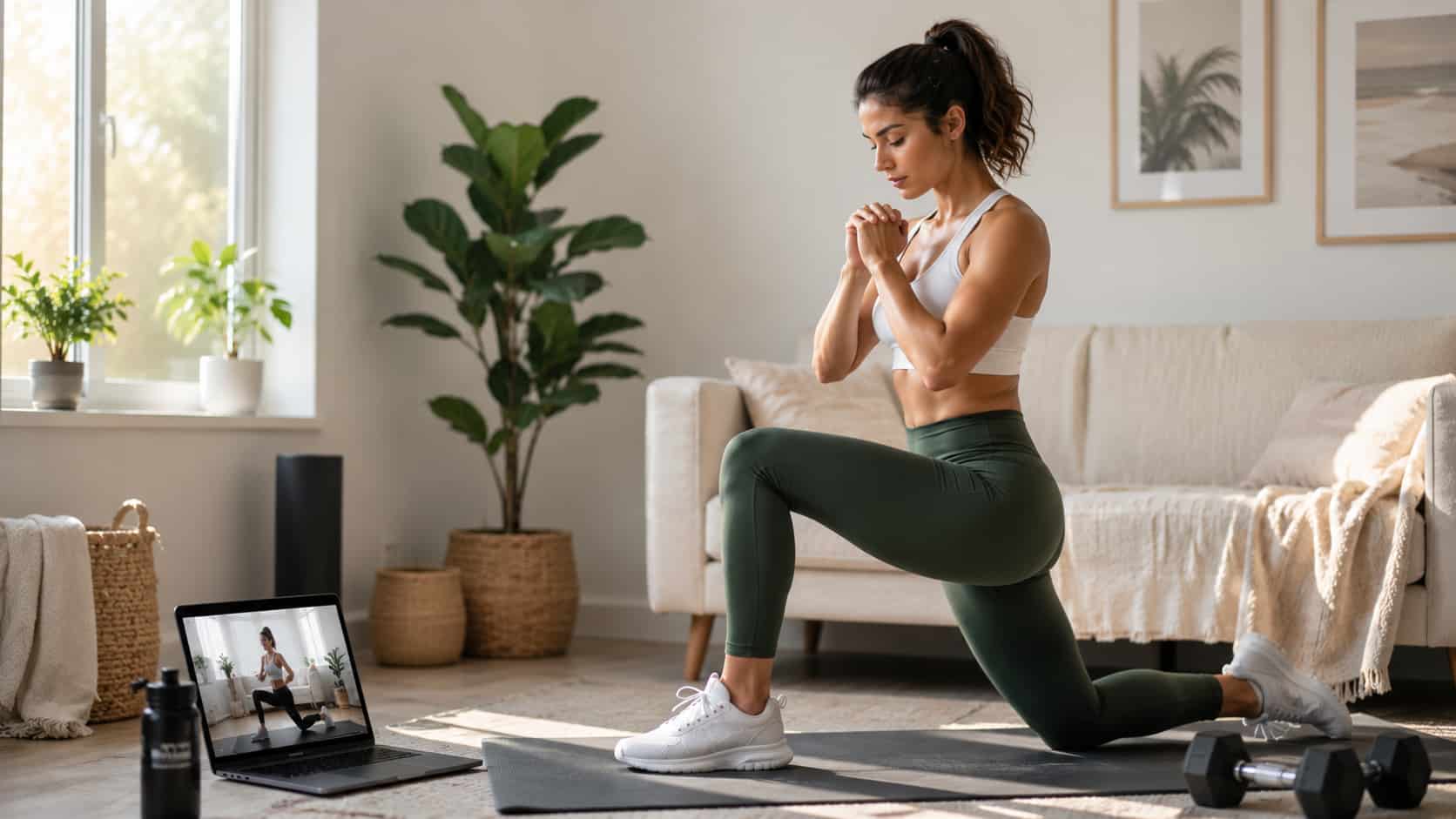
Looking for an easy way to get started with fitness? These 10 Easy Workout Routines for Beginners at Home are simple, beginner-friendly, and perfect for building a habit that feels doable.
Ever tell yourself you’re going to start working out tomorrow, and then somehow tomorrow turns into next week? Yeah, same here.
Starting a fitness routine sounds so easy in your head, but once you actually sit down to figure out what to do, it can start feeling like a lot.
That’s why I wanted to keep this really simple. These routines are made for real life busy mornings, tired evenings, small spaces, and those days when you just want to move a little without overthinking everything.
No gym. No fancy equipment. No confusing moves that make you feel like you need a trainer just to begin. Just easy stuff you can actually do and, more importantly, keep doing.
Why home workouts are actually a good idea
Honestly, home workouts are kind of a win. You can do them in whatever you’re wearing, you don’t have to drive anywhere, and you definitely don’t have to worry about anyone watching you figure things out.
For beginners, that takes a lot of pressure off. You can start small, go at your own pace, and build confidence before jumping into anything harder.
If rebuilding confidence in your body is part of why you’re here, Beautiful Body is a gentle companion for the journey — it’s all about feeling good in your skin through small, kind habits.
And that really matters, because the best workout routine is the one you’ll actually come back to.
Let’s Start Easy
Before you jump into the workout, it always helps to start with something simple. These first few moves are just there to wake your body up and make everything feel a little easier.
Marching
This one is almost too easy, but that’s exactly why it works. Marching in place gets your body warmed up without making you feel like you’ve suddenly been thrown into a hard workout.
Just stand tall, swing your arms, and march for a minute or two. If you want, bring your knees up a little higher.
It’s a nice way to wake your body up, especially if you’ve been sitting for a while.
Arm Circles
If your shoulders feel stiff, arm circles are a simple way to loosen up. They don’t look like much, but they actually help more than people think.
Stretch your arms out to the sides and make small circles first. Then make them a little bigger. After 20 to 30 seconds, switch directions.
Easy, quick, and surprisingly helpful.
Bodyweight Squats
Squats are one of those exercises that show up everywhere for a reason. They work your legs, glutes, and core, and you don’t need any equipment at all.
Stand with your feet about shoulder-width apart, bend your knees, and lower your hips like you’re sitting into a chair. Then stand back up.
Start with 8 to 10 reps and go slow if you need to. No rush here.
Wall Push-Ups
If regular push-ups feel like too much right now, wall push-ups are a great starting point. They still help build strength in your arms, chest, and shoulders, just in a way that feels much more manageable.
Put your hands on a wall, step your feet back a little, then bend your elbows and lean in toward the wall. Push yourself back out.
Simple, effective, and beginner friendly.
Glute Bridges
Glute bridges are such a good lower body move, and they’re super easy to do at home. You can even do them while watching TV if that helps you get started.
Lie on your back with your knees bent and feet flat. Lift your hips, squeeze your glutes at the top, then lower back down. Try 10 to 12 reps.
It works your core and backside without feeling too intense.
When these start feeling easy and you want a plan to follow, the 30-Day Waist Challenge builds on moves like these with a 30-day routine and tracker for your core and waist.
Standing Side Leg Lifts
This one is great for your hips and outer thighs, and its low impact, which makes it perfect if you’re just starting out.
Stand near a wall or chair for balance, lift one leg out to the side, then bring it back down slowly. Switch sides and repeat. Try about 10 reps per leg.
It’s simple, but it really does add up.
Knee Lifts
If you want something that feels a little more cardio-ish without any jumping, knee lifts are a solid choice.
Stand tall and lift one knee up, then switch legs in a steady rhythm. You can keep it slow or pick up the pace a little if you want more of a challenge.
Do this for 30 to 60 seconds.
Knee Plank Hold
Planks are great for core strength, but full planks can feel like a lot when you’re new to working out. A knee plank is a much easier place to start.
Get onto your forearms, keep your knees on the floor, and hold your body in a straight line from your shoulders to your knees.
Even 10 to 20 seconds is enough in the beginning. It may not feel dramatic, but it works.
Step-Touch Movement
This one is basically a simple side-to-side move that gets your body moving without feeling too serious. It’s nice if you want something light and easy.
Step to one side, bring the other foot in, then go the other way. You can even move your arms a little to make it feel more fun.
It’s a cute little cardio break that doesn’t feel intimidating at all.
Stretching Routine
Please don’t skip the cool-down. Stretching helps your body relax and keeps you from feeling stiff afterward.
Focus on your arms, legs, back, and shoulders. Hold each stretch for about 15 to 30 seconds and breathe through it.
Ending your workout, this way makes the whole thing feel more complete, and honestly, a lot nicer too.
A Simple Beginner Workout Plan
If you’re wondering how to put this together, don’t stress about making it perfect. You really don’t need a complicated plan to get started.
Try this:
- March in place for 1 minute.
- Do 10 squats.
- Do 10 wall push-ups.
- Do 10 glute bridges.
- Do 10 side leg lifts per side.
- Hold a knee plank for 15 seconds.
- Finish with stretching.
That’s a full beginner workout right there. You can do it a few times a week and build from there.
How to actually stick with it
Let’s be honest, starting is one thing. Staying consistent is the harder part. The trick is to make it feel easy enough that you don’t keep talking yourself out of it.
Pick a time that fits your day. Keep it short at first. Don’t wait until you “feel ready,” because honestly, that moment may never show up.
And don’t worry about being perfect. Showing up matters’ way more.
I’ve found that once a workout feels easy to start, it gets a whole lot easier to keep going. That’s usually the sweet spot.
FAQs
How often should beginners work out at home?
Three to four times a week is a great starting point. This is a great way of gradually allowing your body to adapt to exercise without being overwhelmed.
How long should beginners‘ workouts be?
Even 10 to 20 minutes is enough. Short workouts still count.
Do I need equipment for home workouts?
Nope. All these exercises are bodyweight exercises so therefore, you can begin today.
Can exercising at home assist you in losing weight?
Yes, they can, especially when paired with balanced eating and consistency.
If fat loss is part of your goal, Boost Your Metabolism & Burn Fat breaks down the practical habits and simple meals that help your body burn fat more efficiently.
What if I feel sore after working out?
A little soreness is normal when you’re new to exercise. Rest, drink water, and take it a little easier next time if needed.
Final thoughts
Getting started does not have to be complicated. These 10 Easy Workout Routines for Beginners at Home are all about keeping things simple, realistic, and doable so you can actually build a habit you’ll stick with.
You do not have to do everything perfectly. You just have to start somewhere.
And if you’re trying to build healthier habits overall, you might also want to check out The Ultimate Self Care Guide 2026: Daily Habits for Self-Improvement & Confidence.
It goes really well with a beginner fitness routine because both are about taking small steps that help you feel better, inside and out.