
Christmas Morning Breakfast: 5 Make-Ahead Dishes for a Slow Holiday Morning
A good Christmas morning breakfast is one you barely have to cook. The presents are under the tree, the coffee is on, and nobody wants to stand at the stove while everyone else opens gifts. So do the work on Christmas Eve. Every dish below is assembled the night before and baked while the morning unfolds — no chopping, no whisking, no decisions before coffee.
Most of the top results for Christmas morning breakfast are single recipes: one casserole, one French toast bake, one set of cinnamon rolls. Useful, but they leave you to build the rest of the morning yourself. This post is the whole menu instead. Five dishes that cover savory and sweet, a timeline that starts on the afternoon of December 24, and a one-oven plan so everything lands at the same time. Pick two or make all five. Either way, Christmas morning stays slow.
Protein counts in this post are estimates from USDA FoodData Central values for the main ingredients. Brands and portions vary, so treat them as a guide, not a label.
Table of Contents
- Why This Christmas Morning Breakfast Menu Works
- The December 24 Timeline
- One Oven, Five Dishes: How the Morning Runs
- 1. Overnight Sausage and Cheddar Breakfast Casserole
- 2. Overnight French Toast Bake
- 3. Overnight Cinnamon Rolls
- 4. Monkey Bread
- 5. Cheesy Hashbrown Casserole
- Food Safety: The Rules That Keep Breakfast Safe
- FAQs
- Try These Next
Why This Christmas Morning Breakfast Menu Works
Every dish in this Christmas morning breakfast shares one rule: nothing gets mixed, cracked, sliced or stirred on Christmas morning. The casserole and the French toast bake are assembled on Christmas Eve and sleep in the fridge overnight. The cinnamon rolls rise in the fridge. The monkey bread is rolled and sugared the night before. The hashbrown casserole is layered and covered. On the 25th, your whole job is turning a dial to 350°F and setting a timer.
The five dishes also share an oven temperature. Everything bakes at 350°F, so two pans can share the oven and the rest follow in sequence without anyone doing oven math at 8 a.m. That is the quiet trick behind a calm Christmas morning: one temperature, one timeline, no juggling.
The menu covers the whole table, too. The casserole is the savory anchor. The French toast bake and the cinnamon rolls are the sweet side. Monkey bread is the pull-apart centerpiece kids reach for first. The hashbrown casserole is the crispy, cheesy side that makes the plate feel complete. If you only make two things, make the casserole and the French toast bake — one savory, one sweet, both baking at the same temperature.
The December 24 Timeline
Afternoon, December 24 — about 30 minutes: Brown the sausage for the casserole and let it cool completely. Cube the bread for the casserole and the French toast bake. Assemble the casserole, the French toast bake and the hashbrown casserole, cover each tightly, and refrigerate.
Evening, December 24 — about 20 minutes: Shape the cinnamon rolls, cover, and refrigerate for their overnight rise. Roll the monkey bread pieces in cinnamon sugar, layer them in the pan with butter and brown sugar, cover, and refrigerate. Set the table. Put the coffee maker on a timer if you have one.
Morning, December 25 — about 10 minutes: Take the casserole and French toast bake out of the fridge while the oven heats to 350°F. Slide both pans in and set a timer. Put the cinnamon rolls and monkey bread in when the first two come out, and bake the hashbrown casserole beside them or right after. Slice, serve, sit down.
One Oven, Five Dishes: How the Morning Runs
Two 9×13 pans fit side by side in a standard oven. Start with the casserole and the French toast bake together — both need about 50 minutes at 350°F. When they come out to rest for 10 minutes, the cinnamon rolls and monkey bread go in for 25 to 30 minutes. The hashbrown casserole needs about 45 minutes, so it can go in with the first pair on a second rack, or bake right after. Nothing here is fussy about an extra five minutes in a warm oven, so the schedule has slack built in.
1. Overnight Sausage and Cheddar Breakfast Casserole

The anchor. A classic strata: bread, sausage, cheese and an egg custard that soaks in overnight. This is the dish people remember.
Prep: 20 minutes | Chill: overnight, 8 to 12 hours | Bake: 50 to 60 minutes at 350°F | Serves: 8 to 10 | Protein: about 19g per serving (estimate)
Ingredients (9×13-inch pan)
- 1 pound breakfast sausage
- 6 cups day-old bread, cut into 1-inch cubes (sourdough, French bread or brioche)
- 2 cups shredded sharp cheddar
- 10 large eggs
- 2 cups whole milk
- 1 teaspoon dry mustard
- 1 teaspoon salt
- 1/2 teaspoon black pepper
- 1 cup sauteed peppers and onions, or a handful of chopped spinach (optional)
Method
- Brown the sausage in a skillet over medium-high heat, breaking it into crumbles, then drain it well and let it cool completely. Warm filling is the enemy of an overnight casserole — it has to be cool before it meets the eggs.
- Grease a 9×13-inch baking dish. Spread half the bread cubes, then half the sausage and cheese. Repeat with the second layer.
- Whisk the eggs, milk, mustard, salt and pepper until evenly blended. Pour slowly over the pan, pressing the bread down with a spatula so every cube gets wet.
- Cover tightly with foil or plastic wrap and refrigerate overnight, 8 to 12 hours.
- In the morning, take the pan out while the oven heats to 350°F, about 20 minutes on the counter. Bake uncovered for 50 to 60 minutes, until puffed, golden and set in the middle. A thermometer in the center should read 160°F.
- Rest 10 minutes before slicing. It slices cleanly once it settles.
Make it yours: diced ham or cooked bacon works in place of the sausage. For a vegetarian version, use spinach, mushrooms and peppers — cook them first and drain off any liquid, or the casserole turns soggy.
2. Overnight French Toast Bake

All the flavor of French toast with nobody standing at a griddle. The bread drinks the custard overnight and bakes up puffed and golden at the edges.
Prep: 15 minutes | Chill: overnight, 8 to 12 hours | Bake: 45 to 55 minutes at 350°F | Serves: 8 | Protein: about 9g per serving (estimate)
Ingredients (9×13-inch pan)
- 1 loaf (about 1 pound) brioche or challah, cut into 1-inch cubes
- 6 large eggs
- 1 1/2 cups whole milk
- 1/2 cup heavy cream (or more milk)
- 1/3 cup brown sugar
- 1 tablespoon vanilla extract
- 1 teaspoon cinnamon
- Pinch of salt
- 3 tablespoons cold butter, cut into small pieces, plus 2 tablespoons brown sugar for the top
Method
- Grease a 9×13-inch baking dish and fill it with the bread cubes.
- Whisk the eggs, milk, cream, brown sugar, vanilla, cinnamon and salt. Pour slowly over the bread so every cube drinks some custard. Press down gently.
- Cover tightly and refrigerate overnight.
- In the morning, dot the top with the cold butter pieces and sprinkle with the brown sugar. Bake at 350°F for 45 to 55 minutes, until puffed, golden at the edges, and set in the center.
- Serve warm with maple syrup and berries.
Make it yours: add a cup of diced apples or pears between the bread layers, or swap the cinnamon for pumpkin pie spice. Day-old bread works best — fresh bread soaks up the custard too fast and turns soft.
3. Overnight Cinnamon Rolls
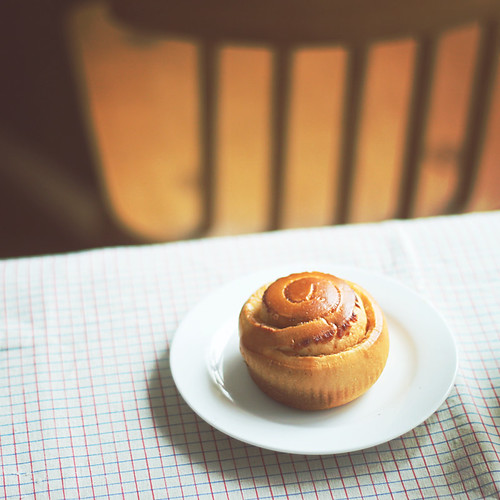
Soft, gooey, and ready to bake while the casserole rests. The overnight rise does most of the work — and honestly, a tube of refrigerated cinnamon roll dough is a perfectly good shortcut on Christmas morning. No judgment here.
Prep: 25 minutes | Rise: overnight in the fridge, up to 16 hours | Bake: 25 to 30 minutes at 350°F | Makes: 12 rolls | Protein: about 4g per roll (estimate)
Ingredients
- 1 cup warm whole milk (about 110°F)
- 2 1/4 teaspoons active dry yeast (1 packet)
- 1/4 cup granulated sugar
- 1 large egg, plus 1 egg yolk
- 1/4 cup unsalted butter, melted
- 3 1/2 cups all-purpose flour, plus more for dusting
- 3/4 teaspoon salt
- 1/2 cup unsalted butter, softened, for the filling
- 3/4 cup brown sugar, for the filling
- 1 1/2 tablespoons cinnamon
- 4 ounces cream cheese, softened, for the frosting
- 1/4 cup unsalted butter, softened, for the frosting
- 1 cup powdered sugar
- 1 teaspoon vanilla extract
Method
- Stir the yeast and a pinch of the sugar into the warm milk. Let it sit 5 to 10 minutes until foamy.
- Mix in the sugar, egg, egg yolk and melted butter, then the flour and salt. Knead until smooth, about 5 minutes by hand. Cover and let rise in a warm spot for 1 hour, until doubled.
- Roll the dough into a rectangle about 12 by 18 inches. Spread with the softened butter, then sprinkle evenly with the brown sugar and cinnamon.
- Roll up tightly from the long side and cut into 12 slices. Arrange in a greased 9×13-inch pan, cover tightly, and refrigerate overnight.
- In the morning, let the pan sit on the counter for 30 minutes while the oven heats to 350°F. Bake 25 to 30 minutes, until golden.
- Beat the cream cheese, butter, powdered sugar and vanilla into a frosting and spread over the warm rolls.
4. Monkey Bread
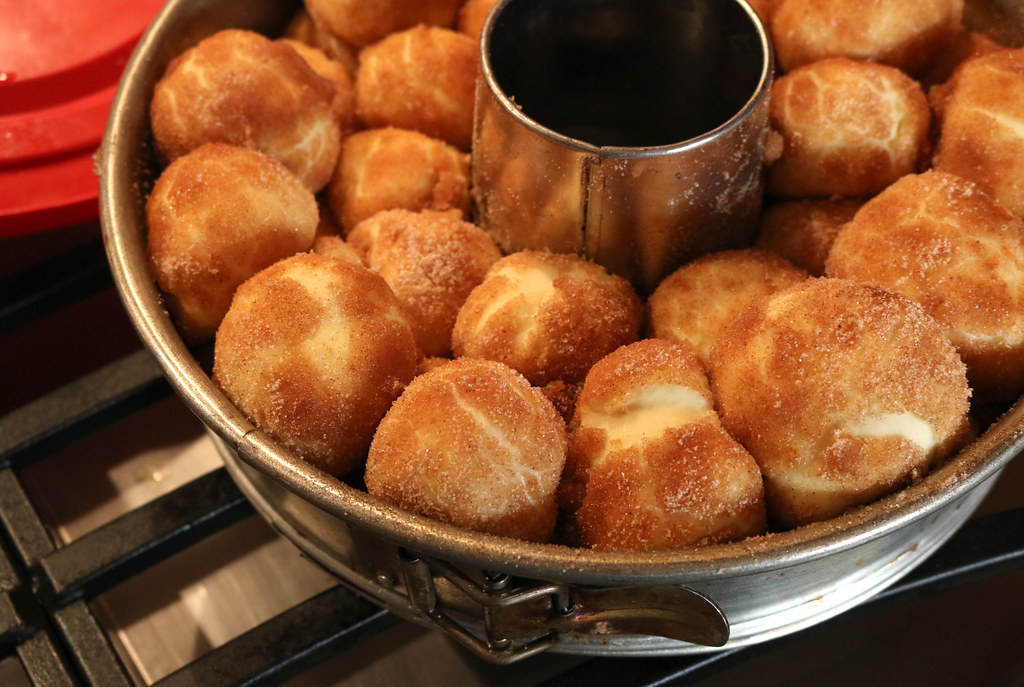
The pull-apart centerpiece. Balls of biscuit dough rolled in cinnamon sugar, layered in a bundt pan with butter and brown sugar, baked into something sticky and golden that everyone tears apart with their hands. Kids reach for this first.
Prep: 20 minutes | Chill: overnight in the fridge | Bake: 30 to 35 minutes at 350°F | Serves: 8 to 10 | Protein: about 5g per serving (estimate)
Ingredients (bundt pan)
- 2 cans (16 ounces each) refrigerated biscuit dough
- 1 cup granulated sugar
- 2 teaspoons cinnamon
- 1/2 cup unsalted butter
- 1 cup brown sugar
- 1 teaspoon vanilla extract
- 1/2 cup chopped pecans (optional)
Method
- Grease a bundt pan well. Mix the granulated sugar and cinnamon in a bowl.
- Cut each biscuit into quarters. Roll each piece in the cinnamon sugar and layer in the pan, scattering pecans between the layers if using.
- Melt the butter with the brown sugar and vanilla, stirring until the sugar dissolves. Pour evenly over the dough.
- Cover tightly and refrigerate overnight.
- In the morning, let the pan sit on the counter for 20 minutes while the oven heats to 350°F. Bake 30 to 35 minutes, until deep golden and bubbling.
- Cool in the pan for 10 minutes, then invert onto a plate. Serve warm, and let people pull it apart.
5. Cheesy Hashbrown Casserole

Crispy on top, creamy inside, and the easiest dish on this list. Shredded potatoes, cheese, sour cream and a crunchy topping — the side that makes the plate feel like a holiday.
Prep: 10 minutes | Chill: overnight in the fridge | Bake: 45 to 50 minutes at 350°F | Serves: 8 | Protein: about 12g per serving (estimate)
Ingredients (9×13-inch pan)
- 1 bag (30 ounces) frozen shredded hash browns, thawed and patted dry
- 2 cups shredded sharp cheddar
- 1 cup sour cream
- 1 can (10.5 ounces) condensed cream of chicken soup
- 1/2 cup unsalted butter, melted
- 1 small onion, finely diced
- 1 teaspoon salt
- 1/2 teaspoon black pepper
- 1 1/2 cups crushed cornflakes or butter crackers, for the topping
- 3 tablespoons butter, melted, for the topping
Method
- Stir the hash browns, cheddar, sour cream, soup, melted butter, onion, salt and pepper together in a large bowl.
- Spread into a greased 9×13-inch pan. Cover tightly and refrigerate overnight.
- In the morning, mix the crushed cornflakes with the melted butter and scatter over the top.
- Bake at 350°F for 45 to 50 minutes, until bubbling at the edges and golden on top.
- Rest 5 minutes before serving.
Make it yours: swap the cream of chicken soup for cream of mushroom to keep it vegetarian, or stir in a cup of diced ham. Thawing and patting the hash browns dry is the step that keeps it from turning watery — do not skip it.
Food Safety: The Rules That Keep Breakfast Safe
Overnight dishes are safe when the fridge does the work and the oven finishes it. Four rules cover everything on this list, all from the USDA Food Safety and Inspection Service (FoodSafety.gov cold food storage charts):
- Keep it cold. An assembled egg casserole goes straight into the fridge at 40°F or below and stays there until it goes into the oven. Never leave an unbaked egg dish on the counter overnight.
- Cook eggs to 160°F. Dishes containing eggs should reach 160°F in the center. A thermometer makes the call — a golden top alone does not.
- Two hours, then fridge. Cooked egg dishes should not sit out for more than 2 hours. Refrigerate leftovers within that window.
- Leftovers last 3 to 4 days. Refrigerate leftover casserole in an airtight container and eat it within 3 to 4 days. Reheat until the center reaches 165°F.
One more habit worth keeping: cool hot fillings completely before they meet raw eggs. Warm sausage or vegetables pushed into a custard can hold the dish in the temperature range where bacteria multiply fastest. Cook, cool, then assemble.
FAQs
Can I make Christmas morning breakfast the night before?
Yes — that is the whole point of this menu. The casserole, French toast bake, cinnamon rolls, monkey bread and hashbrown casserole are all assembled on Christmas Eve and refrigerated overnight, then baked on Christmas morning.
How long can you refrigerate an unbaked breakfast casserole?
Up to 24 hours is the safe window most recipe sources and food-safety guidance use for an assembled, unbaked egg casserole kept at 40°F or below. This menu uses 8 to 12 hours, well inside that limit.
Can I bake a breakfast casserole without chilling it overnight?
Yes, if you give it at least 1 to 3 hours in the fridge so the bread can absorb the custard. Overnight is better — the texture is softer and more even — but a few hours works when you are short on time.
What should I serve with Christmas morning breakfast casserole?
Fresh fruit, a sweet bake like the French toast bake or cinnamon rolls in this menu, and coffee. The casserole is rich, so something fresh and bright on the side balances the plate.
How do I keep a breakfast casserole from getting soggy?
Use day-old or toasted bread, drain the cooked sausage well, cook vegetables first and drain off any liquid, and bake until the center is set and reads 160°F. A soggy middle usually means the bread was too fresh or the filling was too wet.
Can I freeze a breakfast casserole?
Yes. Bake it, cool it completely, then wrap it well and freeze for up to 3 months. Thaw overnight in the fridge and reheat until the center reaches 165°F.
Try These Next
Christmas morning is the sweet spot of the season, but the cooking does not stop at breakfast. Our High-Protein Christmas Dinner Recipes carry the same make-ahead thinking into the evening, with a full holiday menu and protein in every dish. And if the day needs appetizers before dinner, the High-Protein Holiday Appetizers are five complete party bites with the same overnight-friendly approach. For something sweet after the presents, the Classic Christmas Cookies are the batch to bake with kids while the casserole rests.
However many dishes you make, keep the morning slow. That is the real recipe.